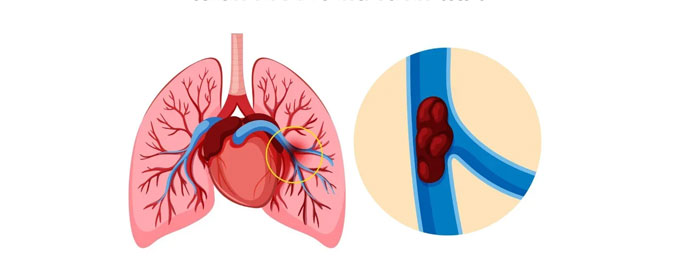
Pulmonary Embolism (PE) is a serious and potentially life-threatening condition in which a blood clot (usually originating from the deep veins of the legs) travels to the lungs and blocks one or more pulmonary arteries. This sudden obstruction disrupts blood flow, reduces oxygen levels, and puts strain on the heart. PE requires immediate medical attention, as delayed treatment can lead to lung damage, heart failure, or death. Early diagnosis and rapid treatment significantly improve survival.
Causes
- Deep Vein Thrombosis (DVT): Most common cause; clots form in the legs and travel to the lungs.
- Prolonged immobility: Long flights, long hospital stays, or bed rest.
- Surgery or trauma: Especially orthopedic or abdominal surgeries.
- Cancer: Certain cancers increase clot formation.
- Hormonal factors: Birth control pills, pregnancy, hormone therapy.
- Genetic clotting disorders: Conditions that increase blood clotting tendency.
Symptoms
- Sudden shortness of breath
- Sharp chest pain that worsens with breathing
- Rapid heart rate or palpitations
- Lightheadedness or fainting
- Coughing (sometimes with blood)
- Anxiety or sense of impending doom
Diagnosis
- CT Pulmonary Angiography (CTPA): Gold-standard for confirming PE.
- D-Dimer Test: Detects increased clotting activity.
- Ultrasound of legs: To check for DVT.
- Echocardiography: Assesses heart strain in severe cases.
- Ventilation–Perfusion (V/Q) Scan: Alternative test for patients who cannot undergo CT.